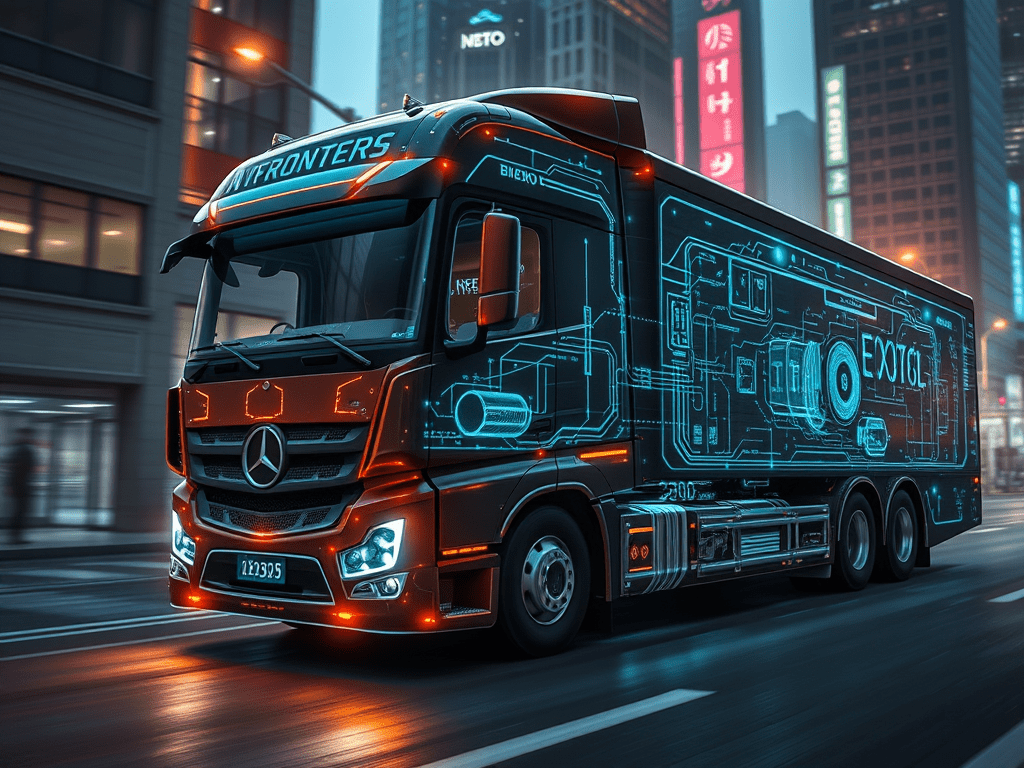
Why Heavy Vehicles Need a Digital Nervous System
In the world of modern transportation, heavy vehicles have evolved far beyond engines and metal. Today’s trucks, buses, tractors, and commercial fleets are smart machines. They sense, communicate, coordinate, and make decisions in real time — all through an internal digital network.
At HardFault, where we are designing an advanced ELD (Electronic Logging Device) and telematics systems, understanding this network is the foundation of everything we build.
The Rise of Intelligent Vehicles
Heavy vehicles today contain multiple electronic control units (ECUs) responsible for:
- Engine management
- Braking control
- Transmission shifting
- Emissions systems
- Dashboard and instrumentation
- Telematics and remote monitoring
Each of these ECUs handles one job but must constantly coordinate with the others.
For example:
- Brakes must alert the engine when traction is lost
- The accelerator pedal must tell the engine how much torque to deliver
- Diagnostic systems must broadcast when a fault occurs
Without a shared communication system, these interactions would be slow, unreliable, or impossible.
Introducing the Vehicle’s Digital Nervous System
Just like the human body uses nerves to transmit information instantly, heavy vehicles use an internal data network to share critical information. This network ensures:
- Safety — Anti-lock braking, traction control, speed limiting
- Efficiency — Optimized fuel delivery, load calculations
- Compliance — Emissions monitoring, diagnostics
- Telematics — Engine hours, speed, RPM, faults for fleet analysis
Every second, dozens of messages move across the vehicle — speed, torque, temperature, pedal position, fault codes, pressure, and much more.
To read these messages, we need two key technologies:
CAN Bus (Controller Area Network)
This is the physical highway: two wires where all ECUs communicate. It’s designed to resist interference, survive harsh conditions, and deliver data with reliability.
J1939 Protocol
This is the language spoken on that highway. It defines the meaning of every message — which ID represents engine speed, what bytes represent vehicle distance, how faults are reported, and how large data like VIN is transmitted.
Together, they form the complete digital nervous system of every modern heavy vehicle.
Why This Matters for ELD Devices
An ELD must read accurate engine data to comply with government regulations.
But an ELD cannot guess or estimate data — it must listen to the vehicle’s internal network.
An ELD reads:
- Vehicle speed
- Engine speed (RPM)
- Engine hours
- Odometer
- Faults (DM1)
- Fuel information
- Pedal position
- Driving/idle conditions
These values all come directly from the CAN + J1939 network.
A robust ELD must be able to:
- Detect broadcasted engine data
- Request specific information (like VIN) when needed
- Understand standard message IDs
- Interpret raw bytes into meaningful metrics
- Deliver accurate logs for regulatory compliance
Without understanding J1939, an ELD is blind.
Why the Digital Network Exists
To summarize in simple terms:Heavy vehicles need a digital nervous system because mechanical communication simply can’t keep up with modern safety, efficiency, diagnostic, and compliance demands.And because the entire industry agreed on a common protocol (J1939), devices like ELDs, telematics units, and diagnostics tools can work across all manufacturers — from Volvo to Freightliner to BharatBenz.
Conclusion
The digital communication inside a heavy vehicle is not optional — it’s the backbone of every function the driver, fleet operator, and mechanic depends on. At HardFault, our ELD development begins with mastering this communication layer, ensuring that every piece of data we record is precise, compliant, and trustworthy.
 HardFault
Leave a comment