Here is the full draft for Episode 7 of your blog series:
Certified to Launch: Navigating Compliance for Consumer Electronics
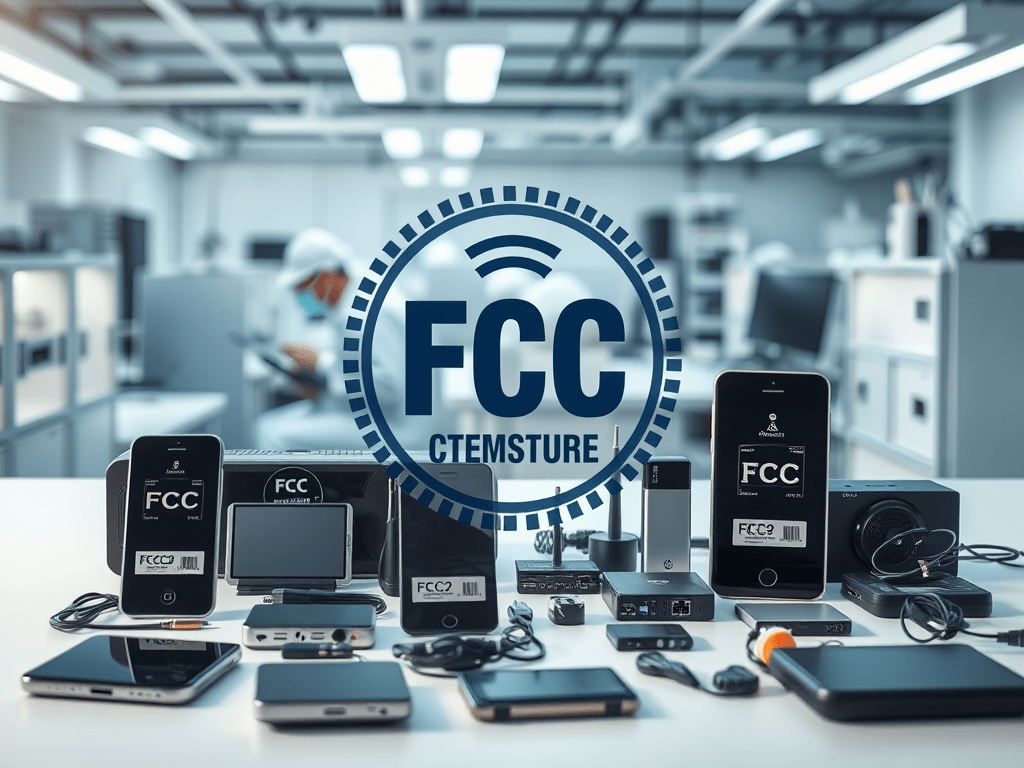
If you’re aiming to sell your electronic product in the United States, then FCC certification is absolutely essential. It’s not just a regulatory requirement—it’s your license to legally operate any device that emits radio frequency (RF) energy in the U.S.
What is FCC Certification?
The Federal Communications Commission (FCC) regulates all communications and RF devices in the United States. FCC certification ensures that your product doesn’t interfere with other electronic devices and operates safely within the allocated frequency ranges.
Why is FCC Certification Required?
- Legal Compliance: Mandatory for most electronic devices sold in the U.S.
- RF Safety: Ensures your product doesn’t disrupt other devices or systems.
- Customs Clearance: Products without FCC certification can be detained or denied entry into the U.S.
- Market Trust: Adds credibility and consumer assurance.
Who Needs It?
If your product has Wi-Fi, Bluetooth, GSM, Zigbee, or any RF component, it likely needs FCC certification.
Common products include:
- IoT devices
- Smartphones, tablets
- Bluetooth speakers and wearables
- Wireless cameras
- Remote-controlled devices
- Smart home gadgets
Types of FCC Approvals
- FCC Certification (most stringent)
- Required for intentional radiators (e.g., RF transmitters, Wi-Fi, BLE devices)
- Involves accredited lab testing and filing with the FCC
- Supplier’s Declaration of Conformity (SDoC)
- For unintentional radiators (e.g., digital circuits without wireless transmission)
- Manufacturer self-certifies using lab test data
FCC Certification Process
Step 1: Product Testing
- Conducted at an FCC-recognized accredited testing lab
- Testing includes:
- RF Emissions
- Harmonic & Spurious emissions
- Bandwidth and power output
Step 2: Documentation
- Create a Technical File including:
- Test reports
- Internal/external photos
- User manual
- Block diagram, circuit schematics
- Operational description
Step 3: FCC ID Application
- Submit to a Telecommunication Certification Body (TCB)
- The TCB reviews and issues an FCC ID
Step 4: Labeling and Compliance
- Mark the device with the FCC logo and FCC ID number
- Include a compliance statement in the user manual
Labeling Requirements
Must include:FCC ID: 2ABCX-123456 This device complies with Part 15 of the FCC Rules. Operation is subject to the following two conditions: (1) this device may not cause harmful interference, and (2) this device must accept any interference received.
Cost of FCC Certification
Item Approximate Cost (INR) RF Testing (by accredited lab) ₹1,00,000 – ₹3,00,000 TCB Filing Fee ₹50,000 – ₹1,50,000 Documentation & Consulting (optional) ₹40,000 – ₹80,000
Total Estimate: ₹1.8 – ₹5 Lakhs per device
Timeline
- Testing: 2–3 weeks
- TCB review and approval: 1–2 weeks
Total Time: ~4–5 weeks
Key Notes
- FCC certification is model-specific
- Pre-certified RF modules reduce effort, but the final product may still need testing
- FCC ID must be traceable online on the FCC database
Risks of Non-Compliance
- Heavy fines (up to $150,000 per violation)
- Product seizure
- Loss of market access
- Blacklist by retailers or platforms
 HardFault
Leave a comment