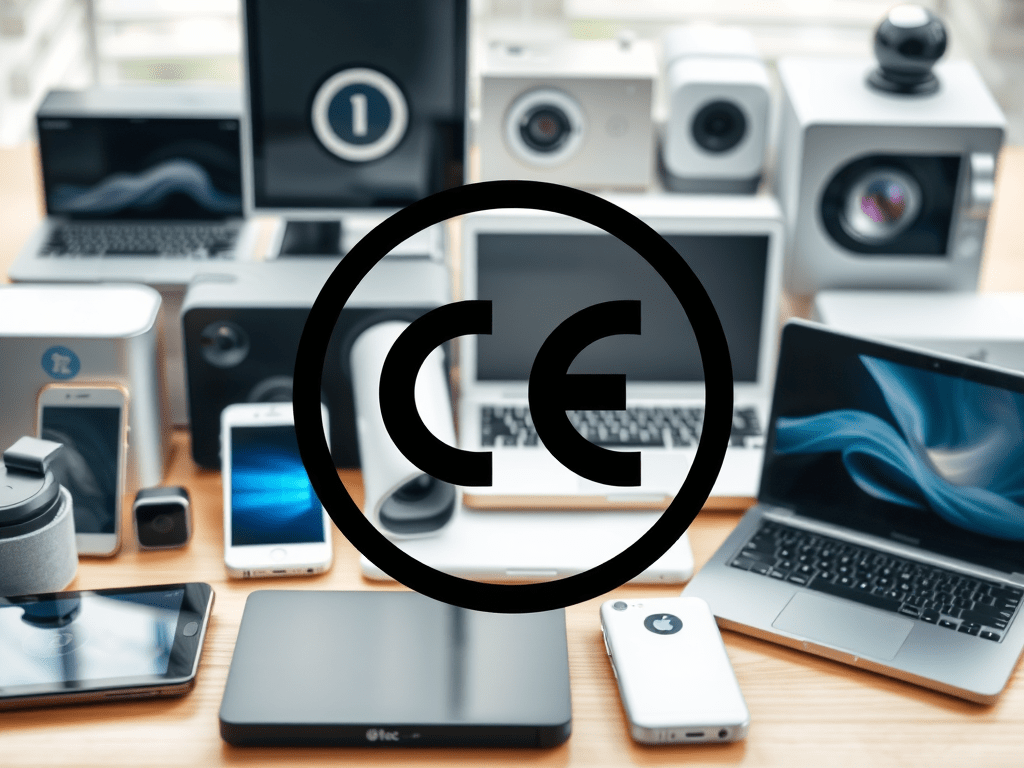
Certified to Launch: Navigating Compliance for Consumer Electronics
CE Certification: Your Passport to the European Market
If you’re planning to sell your electronic product in Europe, the CE mark is not just an option — it’s mandatory. This tiny symbol indicates that your product complies with all applicable EU health, safety, and environmental protection legislation.
Let’s dive into what CE certification is, why it’s important, how to get it, and what it costs.
What is CE Certification?
CE stands for Conformité Européenne (French for “European Conformity”). It’s a self-declaration that your product meets the EU directives or regulations that apply to it — like EMC, Low Voltage Directive, and RoHS, among others.
Why is it Required?
- Legal Requirement: Without it, your product cannot be legally sold or distributed in the EU and EEA.
- Market Access: It’s your ticket to 30+ countries, including all 27 EU states plus Norway, Iceland, Liechtenstein, and Turkey.
- Consumer Trust: The CE mark is a symbol of safety and compliance to buyers and distributors.
- Customs & Import: Products without CE marking can be held or rejected at customs.
What Types of Products Need CE Certification?
Any electronics that fall under one or more of the following categories:
- Devices with power supply above 50V AC or 75V DC (Low Voltage Directive)
- Products with Wi-Fi, Bluetooth, or other radio features (RED Directive)
- Devices that can emit or be affected by electromagnetic interference (EMC Directive)
- Products made of materials containing hazardous substances (RoHS Directive)
CE Certification Process: Step-by-Step
- Identify Applicable Directives and Standards
- Determine which EU directives apply (e.g., LVD, EMC, RED, RoHS).
- Select harmonized standards for testing and compliance.
- Product Testing
- Conduct testing in accredited labs to ensure conformity with relevant standards.
- Includes EMC, safety, RF testing (if wireless), and RoHS compliance.
- Compile Technical Documentation
- Maintain a Technical File including:
- Test reports
- Risk analysis
- Circuit diagrams
- Design schematics
- User manual
- Labeling info
- Maintain a Technical File including:
- Draw Up the EU Declaration of Conformity (DoC)
- A formal declaration by the manufacturer or authorized representative stating compliance.
- Affix the CE Mark
- You can now place the CE mark on the product, packaging, and manuals.
- Maintain Compliance
- Be prepared for audits or market surveillance. Keep documentation for at least 10 years.
Who Can Issue CE Certification?
CE marking is mostly a self-declaration, but for high-risk categories, you may need involvement from a Notified Body (independent certification organization).
You can find these bodies on the EU NANDO database.
Cost of CE Certification
Costs can vary widely based on complexity and product type: Component Approximate Cost (EUR) Lab Testing (EMC, RF, etc.) €2,000 – €10,000 RoHS Material Analysis €500 – €1,500 Consultancy (optional) €1,000 – €3,000 Notified Body (if required) €5,000 – €15,000
Total Cost Estimate: €3,000 – €20,000
(Self-declared products tend toward the lower end)
Tips for a Smooth CE Process
- Design for compliance early: Save redesign costs by using CE-tested components and PCB layouts.
- Use pre-certified modules: Especially for wireless — cuts down on RF testing.
- Document everything: Keep traceable records from day one.
- Work with labs familiar with CE: They can guide you through technical hurdles.
What Happens If You Skip CE?
- Your product can be seized at customs.
- You may face legal action or fines.
- You may be required to recall products at your own cost.
- Distributors may refuse to stock your product.
 HardFault
Leave a comment