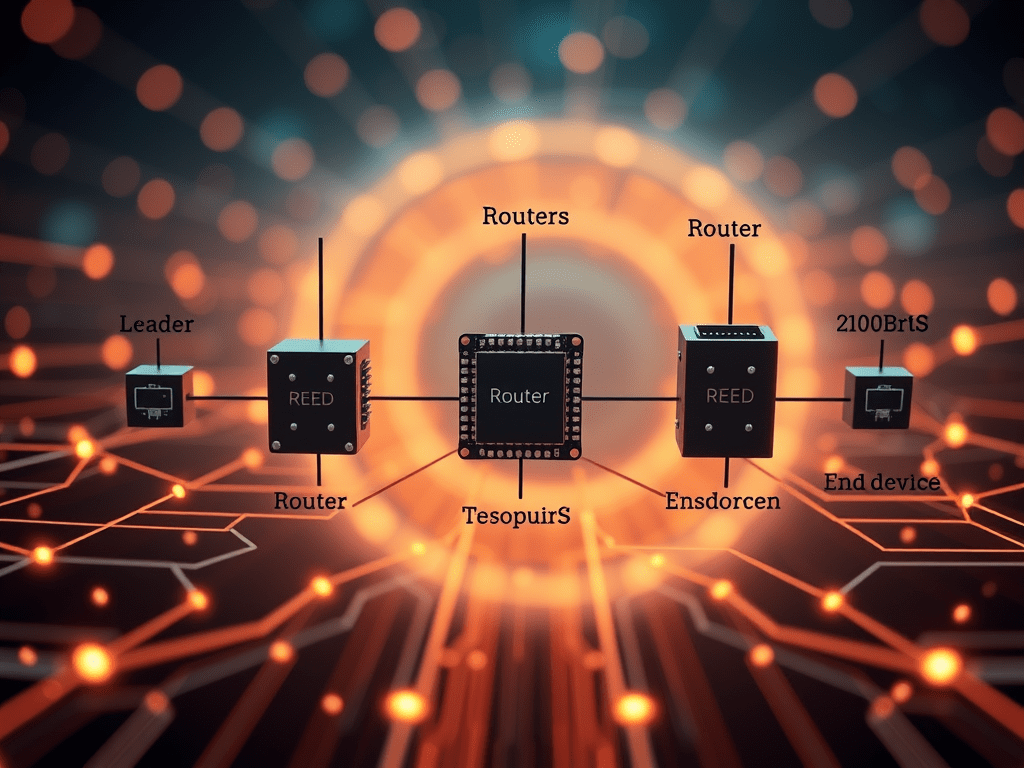
Episode 6: Understanding Device Roles in Thread Protocol (STM32WB)
Introduction
As we continue our journey into Thread protocol with STM32WB, it’s essential to understand the different roles that devices can play within a Thread network. These roles are dynamic and play a vital part in maintaining network stability, security, and scalability. In this post, we’ll explore each role in detail and see how they interact within a Thread mesh.
Overview of Device Roles
Thread networks are built on six primary device roles. Each role contributes differently to the network’s structure and behavior. Let’s break them down:
1. Leader
- Manages the network topology.
- Assigns router IDs and handles router promotion/demotion.
- There is always only one leader in the network at a time.
- If the Leader fails, another router automatically takes over.
2. Router
- Forwards packets within the mesh network.
- Can directly communicate with other routers and end devices.
- Maintains routing tables and helps extend network range.
3. REED (Router-Eligible End Device)
- Behaves like an end device but can promote itself to router if needed.
- Helps dynamically adjust network density based on need.
4. End Device (ED)
- Relies on a parent router for communication.
- Cannot forward packets.
- Simple and power-efficient – ideal for battery-powered devices.
5. Sleepy End Device (SED)
- A type of end device that remains in sleep mode most of the time.
- Wakes up periodically to receive data from its parent router.
- Consumes extremely low power – great for sensors and wearables.
6. Border Router
- Connects the Thread mesh to external IP networks (like Wi-Fi or Ethernet).
- Often used for cloud communication or firmware updates.
- Can be hosted on STM32WB with appropriate stacks or using companion processors.
Device Role Transition
One of the most powerful aspects of Thread is the ability of devices to change roles dynamically. For example, a REED can become a Router if network conditions demand it, and a Router can demote itself back to a REED if the network becomes dense.
STM32WB and Role Configuration
When working with STM32WB, you can configure device roles via OpenThread APIs. For example, setting a device to be only an End Device or allowing it to be a REED. This flexibility helps optimize the network based on the application (e.g., smart lighting, sensors, access control).
Conclusion
Understanding these roles is crucial for building a resilient and scalable Thread network. Each role has its purpose, and the dynamic nature of role transitions ensures the mesh remains self-healing and efficient. In the next episode, we will begin configuring OpenThread on STM32CubeIDE to bring our network to life.
 HardFault
Leave a comment